The Real Thing
Religion in Daily Life by Pastor Michael L. Lawson
Many years ago, while making my way back to North Texas after spending the Thanksgiving holidays with my family, I decided to stop at a mall in Tyler to buy some Christmas gifts. Entering through the Sears store, I happened upon an interesting scene.
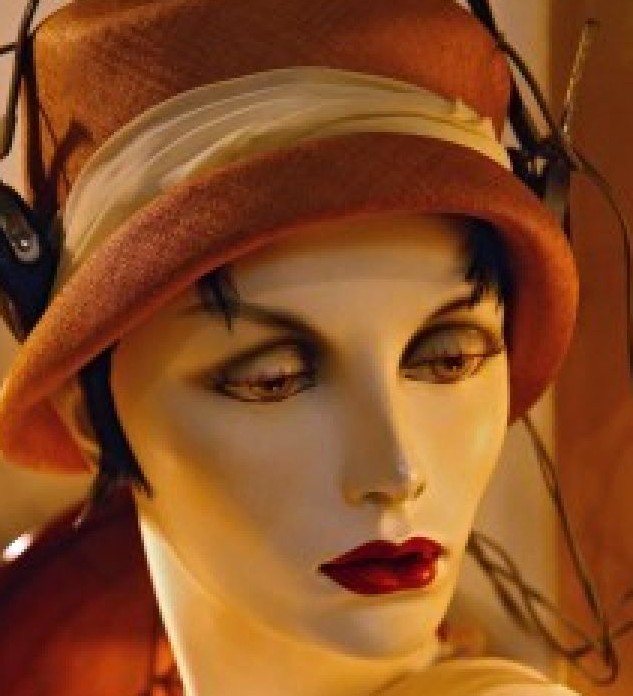
A small group of people had gathered around a mannequin modeling clothing. The mannequin was amazingly lifelike, and it was clear that the people in the crowd were trying to determine whether the model was indeed human or artificial. A little girl approached the figure, reached out, and touched it. The little girl’s eyes brightened, her smile widened, and she turned to her mother. “She’s real! Mommy, she’s real! I know she is real because I touched her and she is real!” Even the human “mannequin” could not suppress a smile. Clearly this model had mastered the art of artificiality. She was excellent at appearing to be different than she really was.
When religion in daily life is addressed, the issue of authenticity vs. artificiality must be also addressed. Many people incorrectly believe that the practice of religion has little to do with real life. In a world that desperately longs for almost anything real, those who have discovered in their faith strength stronger than themselves ought to be the most real.
The amazing discovery that we are actually created in the image of God should generate a desire for the person of faith to become nothing other than the very person he is created to be. Anything other than that is artificial.
What does it mean to be real? Being real means being exactly who God intends us to be. It requires putting off unwarranted expectations heaped upon us by society and well-meaning people who want to recreate us in an image they have designed. It means that elements and aspects of our lives that are really not us are stripped away. It means that we examine our actions and desires and reconcile them with who we are at the core of our being. It means that we allow ourselves to be shaped by our biblically informed understanding of who we are, rather than by the twisted and tainted perspectives of those around us.
How invigorating to finally realize how uniquely special every individual really is, specifically because they are God’s handiwork. It is so clearly right then to search relentlessly for that person that God Himself had in mind when He brought us into existence.
Our society is not a friendly place for authenticity. There is a seduction of minds and hearts aimed at conforming every person to some popular image. When this occurs, at best the real person is hidden and his uniqueness is unclear. At worst, life has little meaning or fulfillment. How wonderful it is when individuals are so comfortable and confident in their own skins that there is no longer any need to master the art of artificiality.
There is that chasm between knowing and doing, or in this case being. Realizing there is no advantage in artificiality is the first major step in obtaining authenticity. This is where religion in daily life really does matter.
As we pursue the life for which we were created with deep, daily reliance on the one who in fact made us, what is meant by being real comes into focus. The desire to become anything other than who He intends us to be loses its luster. For the weekend religionist, there is little help. He must find his own way absent the help of the one who created him.
There is a song that came out a while back entitled, “Let Me be Myself.” The lyrics essentially voice a plea for renewed authenticity. It is always easier to be yourself than to attempt to be someone else. And in fact, in trying to be anyone other than yourself, failure is certain.
As we pursue life by faith and are connected with our creator, we genuinely learn what it means to be real. It is not enough to just be yourself. We all need the help and guidance of God if we are to be the person He had in mind when He created us. It is our faith in Him that informs and then forms us into the authentic individuals we are meant to be. May we never stop until we become exactly the person God intends, with freedom to shun the art of artificiality.
First Baptist Church of Sherman
400 S. Travis St
Sherman TX 75090
(903) 892-9122
mike@fbcsherman.org
Publisher’s Note: This is one in a series of Guest Editorials on the subject of “Religion in Daily Life,” authored by members of the Texoma clergy. If you would like to submit a column for this space, contact: publisher@TexomaLiving.com. Not all submissions will be accepted and acceptance is purely at the discretion of the Publisher. The opinions expressed are those of the author and do not necessarily reflect those of Texoma Living! Magazine or its management.
The Art of Forgetting
Religion in Daily Life by Pastor Charles Glass
When asked to write this article, I pondered in my heart what my subject should be and how I might aid someone on their journey of life.
The great purpose of the church is to help someone better know God and His purpose for their life. God wants each one to have a strong foundation, and that foundation is found in His word. So it is good for us to remember God, His word, His love, His grace, His mercy, and above all, how much He really does love each one.
It is possible to grow up in a church, within a spiritual atmosphere, and never get the message that God really does care about the individual. I believe this is one message upon which Jesus, in His ministry, placed strong emphasis—His care for one. Often times we see Him taking one person aside to minister to them. So it is a must for you to know that He cares for you, not just the multitudes.
We often see in the newspapers and other means of advertisements, various courses designed to aid people in remembering. Some years back, a new drug was introduced to aid a person with failing memory. These aids are nothing new; memory help was first born in the mind of Simonides of Ceos some five hundred years before Christ.
Would you like to share your own ideas on the subject of forgiveness? Leave a Comment for this story.
The name given it is mnemonics: the art of assisting memory by associating a name with an object or event. I will have to admit that sometimes our memory does fail. Some years ago, a friend of mine was introducing a minister to speak at a large gathering. He had not previously met the minister, whose name was David Silvernail. Using the method of mnemonics, he thought… “something valuable and used to fasten something to an object…” Then he welcomed the minister to the pulpit and said, “Ladies and gentlemen, may I introduce to you Reverend David Goldscrew.”
A good memory is an invaluable asset; by all means cultivate it. There is so much in life that we need to remember. In fact, life would be full of tragedy without this marvelous asset. Right along with this art of recollection, (which we cannot too highly eulogize) there is something equally important and yet not often applauded: the art of forgetting. There is a splendid art in that direction that we need to cultivate.
We have called forgetting a weakness that should be avoided, but this is an art ascribed to God. The writer of Hebrews says, “… their sins and their iniquities will I remember no more.” If a person repents of sins and rightly seeks divine forgiveness, the record of misbehavior is not only crossed off the books of Heaven, but God actually allows it to pass completely from His memory. This ability that God shows us is so great that a good moral man and a terribly sinful man are placed alike in forgiveness.
If there is a possibility that in life you have wronged someone, in order to lift that load of guilt from your heart and mind, ask for forgiveness and then use this great God-given ability to forget it. You owe it to yourself, your family, and the person you have wronged.
This ability and the gift of forgiveness that God has shown toward us is something we need to strive to imitate. We do well to put from our minds all wrongs done to us. During one’s lifetime an individual is bound to be misrepresented, lied about, injured, hurt, and deceived. In order to have a happy life, for one’s own sake, these things must be put behind and forgotten. Some people are not aware that this can be a plague to them all the remaining years of their life. Here we should use the art of forgetting. It is something that we must want and be willing to put effort into in order to achieve the desired result.
When you and I repent of our sins and wrong-doings before God, we have a right to forget those wrongs. It would be a senseless and useless thing to carry those wrong-doings in our hearts and minds and hammer ourselves with them. We do not want to take sin lightly, but we do want to know how really simple it is to find forgiveness and, in turn, use the art of forgetting.
The great apostle Paul said, “Forgetting the things that are behind, I press forward.” So should we also use the art of forgetting and press forward to a great life designed by God Himself.
Remember, Jesus Christ forgives and forgets our wrong doings. We would do well to imitate this practice in our life.
Faith Church
1800 N. FM 1417 (Heritage Pkwy)
Sherman TX 75090
(903) 893-0349
www.faithchurch.us
Publisher’s Note: This is one in a series of Guest Editorials on the subject of “Religion in Daily Life,” authored by members of the Texoma clergy. If you would like to submit a column for this space, contact: publisher@TexomaLiving.com. Not all submissions will be accepted and acceptance is purely at the discretion of the Publisher. The opinions expressed are those of the author and do not necessarily reflect those of Texoma Living! Magazine or its management.